Resources

Web Links

Links to recognized state and national non-profit organizations and governmental web sites are provided below. These sites are not owned or maintained by the Township of West Windsor or the Environmental Commission neither of which are responsible for content or availability.

Archives

Sustainable West Windsor

The Sustainable West Windsor Plan was a major development project of the Environmental Commission. This plan was funded by a grant from the Association of New Jersey Environmental Commissions (ANJEC) and a Smart Future Planning grant from the New Jersey Department of Community Affairs (NJ DCA).

The Sustainable West Windsor Plan 2007 was a project initiated by the Township Environmental Commission with an objective to provide a roadmap for evolving the Township into a more environmentally sustainable community by:

  • Defining “sustainable” for West Windsor;
  • Identifying actions and achievements to attain sustainability;
  • Tracking progress over time.

West Windsor Township will be most successful in implementing sustainable development if these actions relate to the significant issues facing the community. The Township’s Master Plan describes many of these issues. However, the identified approaches to implementing the Master Plan may not include sustainability as a criterion for selection and the comprehensive nature of sustainability planning may raise issues not previously represented in a master plan. It’s envisioned that the Sustainable West Windsor Plan 2007 will inform future Master Plan updates.

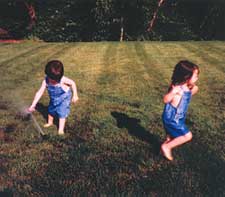
Find out how to keep your lawn healthy without making your family and pets sick.

Minimize the use of Pesticides and Fertilizers

lawnsHealthy Lawns....Healthy People

Printed Brochure Paid for by the West Windsor Environmental Commission

Why should I be concerned about using pesticides on my lawn?

Studies suggest possible links between pesticide exposure and human and pet illness. Some of the most commonly used pesticides may pose a "cancer risk" and some are linked to birth defects. Importantly, studies show that children and pets are especially vulnerable.

How can I ensure a lovely lawn without using pesticides or synthetic fertilizers?

If you use a lawn service, choose the right one.

Choose a lawn service that employs Integrated Pest Management (IPM) or other strategies that reduce reliance on pesticides*. (The State of New Jersey recently established a law mandating the use of IPM on public school property). These companies will most likely spot treat problem areas and use chemicals as a last, rather than first, resort.

*For a list of Integrated Pest Management trained landscapers call Rutgers Cooperative Extension 732-349-1246

If you do your own lawn care, reduce your reliance on pesticides. Having a healthy, vigorous lawn relies on a preventative approach:

  • Plant proper varieties of grass. Choose appropriate grasses for your soil and light conditions. The Rutgers Cooperative Extension Office* can provide additional information.
  • Mow High. Because taller grass chokes out weeds like crabgrass, set mower between 3 1/2 and 4 inches in height. Rotate mowing pattern to prevent compaction and mow frequently so that no more than 1/3 of the blade is removed. Leave grass clippings on the lawn and reduce the need for synthetic fertilizer.
  • Aerate soil. Aeration helps reduce compaction, loosening the soil structure and allowing the soil to "breathe." Use a core aerator, which removes a 3/4" diameter plug from the soil. Enzymatic soil conditioners and gypsum also help to loosen the soil.
  • Remove thatch. Rake frequently to remove thatch, the dead material that accumulates at the base of the grass. Organic fertilizers help break down thatch naturally.
  • Reduce weeds. Hand dig weeds until competition from thriving grass eliminates them.
  • Water deeply but not often. Drought distressed dormant spots will green up with rain. If you do water your lawn, do so only in the cool of morning.
  • Use landscaping techniques. Choose native species of grasses, flowers, shrubs, and trees. These are suited to New Jersey's climate and soils and as such require minimal care. Select plants that are appropriate for the climate conditions in your yard, shaded or sunny, wet or dry. Plant ground covers like pachysandra or periwinkle in shaded areas where grass is hard to establish and maintain. "Landscaping for Water Conservation: A Guide for New Jersey," is a list of design, plants, mulches, and watering techniques from the Rutgers Cooperative Extension program.

To minimize pests in the garden and lawn:

  • Attract birds, " nature 's insect control. " Plant trees that birds love and use as food sources, such as bittersweet, crabapple, flowering dogwood, holly, and red cedar.
  • Use beneficial insects such as ladybugs, praying mantises, and lacewings that kill pests such as aphids and tomato hornworms.
  • Use plants as natural pest repellants. Marigolds, nasturtiums, geraniums, and tansies all have natural "pesticide" properties. Instead of blanket chemical sprayings, remove the diseased portions of the plant by hand.
  • If all else fails, resort to "least toxic" methods of pest control. Use biological pesticides such as Bt for leaf-eating worms and caterpillars; milky spore disease for Japanese beetle grubs and other closely-related grubs. Other pesticides are pyrethrum, rotenone, and sabadilla. Use beneficial nematodes to control soil pests. Safer Soap brand natural insect spray can be used indoors on houseplants as well as in the garden and is environmentally friendly. Oil sprays can be used during the dormant season to control scale insects, red spider mites, mealybugs, aphids, and whitefly larvae on shrubs, evergreens, woody plants, fruit and shade trees, azaleas, roses and other ornamentals. Apply according to label directions.
  • Remember to buy only what you will use for your current needs, choosing the least toxic pesticide possible, and store and dispose of unused pesticides following package instructions. For information on household hazardous waste drop off days, contact the Mercer County Improvement Authority 609-278-8100.

For Information on Healthy Lawns without Toxic Chemicals contact:

Rutgers Cooperative Extension Service of Mercer County
(Barbara J Bromley) 609-989-6830

Association of New Jersey Environmental Commissions (ANJEC)
(973) 539-7547 www.anjec.org

Healthy Lawns….Healthy People
Doc app

Document Center

The Document Center provides easy access to public documents. Click on one of the categories below to see related documents or use the search function.

Categories always sorted by seq (sub-categories sorted within each category)
Documents sorted by in Descending Order within category

Current News & Documents7 documents

  • WW Green Team to Seek Sustainable Jersey Recertification for 2025
  • Research into Lawns Options
  • Gas Powered Leaf Blower Review
  • Healthy Lawns….Healthy People
  • Driving tips: Drive Green, Save Green
  • Fertilizer Law Quick Facts
  • Single Use Carryout Bag Ban

Web Links & Archives5 documents

Climate Action Information3 documents

  • Climate Action Plan Executive Summary
  • Draft Climate Action Plan Report
  • Climate Action Plan Presentation to Council – 7/13/15

Sustainable West Windsor2 documents

  • Sustainable West Windsor Plan
  • Sustainable West Windsor Reference Compendium